Bangkok is one of the most photographed cities in the world, and it shows: at the famous spots, you will share the view with a hundred phones. The difference between an average photo and a great one here is rarely the camera. It is the time of day. Heat haze flattens everything at noon, and the same temple looks completely different at 8 am and at sunset.
So instead of a list of 30 spots, this is a day planned around the light.
Early morning: the temples, before the crowds
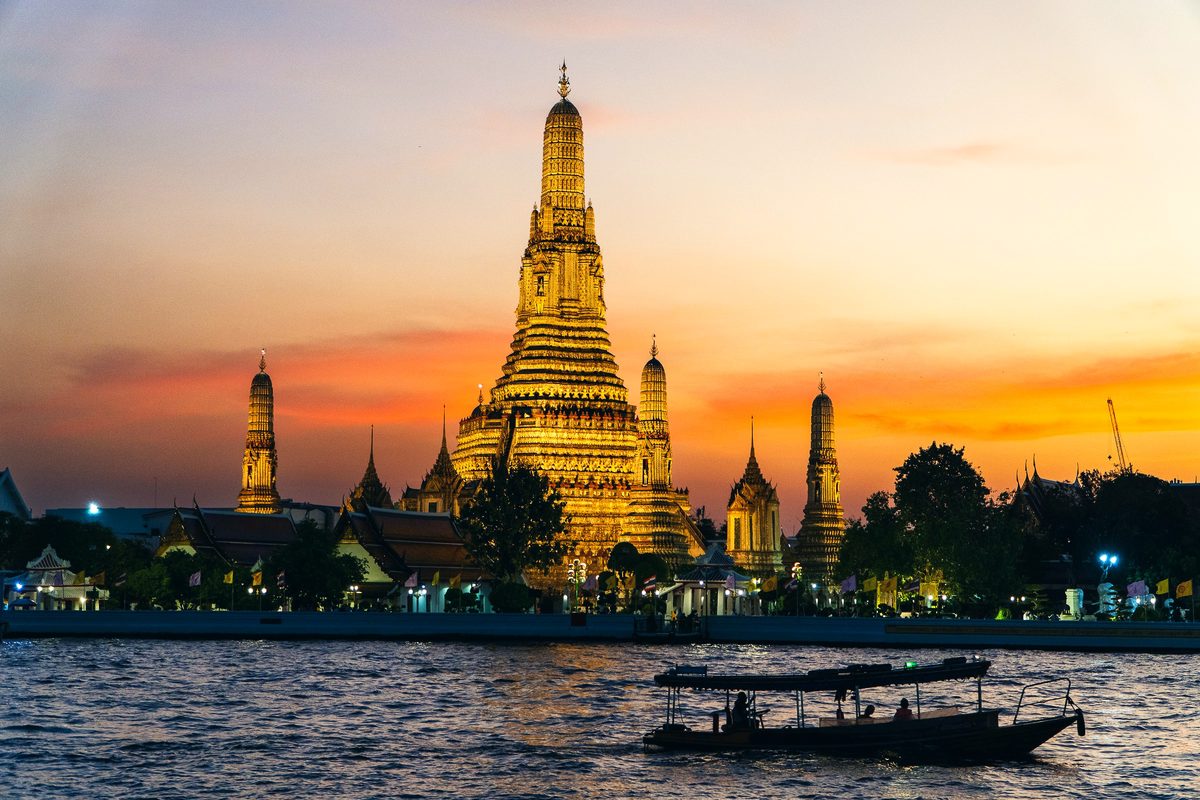
Wat Arun (Temple of Dawn). The porcelain-covered prang on the west bank of the river is Bangkok’s signature shot. Arrive at opening, around 8 am, when the light is soft and the tour groups have not arrived. Get close to the walls: the flowers and patterns are made of thousands of pieces of broken Chinese porcelain. Entry is ฿200, and visitors can usually climb only to the lower terrace of the main tower. Get there by the cross-river ferry from Tha Tien pier, by Wat Pho.
Wat Pho. Right across the river, home to the huge golden reclining Buddha. The hall gets crowded fast, so go straight to the Buddha first, then wander the quieter courtyards with their rows of colourful chedis, which most visitors rush past. Entry is ฿300.
Tip: temple dress code applies to both. Shoulders and knees covered, for men and women. Read our temple dress code guide before you go.
Late morning: the Grand Palace or a quieter temple
The Grand Palace and Wat Phra Kaew are spectacular, but they are also the busiest place in the city, and by late morning it is hard to take a photo without a crowd in it. If you are going for the photos rather than the history, consider Wat Benchamabophit, the “Marble Temple”, instead: white Italian marble, golden roofs, and a fraction of the visitors.
Afternoon: Talat Noi and the old riverside
By early afternoon the light is harsh, so head for the shade of narrow lanes. Talat Noi, next to Chinatown on the river, is one of Bangkok’s oldest neighbourhoods: Chinese shrines, old shophouses, piles of rusty engine parts, murals and street art around every corner, and the 19th-century Holy Rosary Church nearby. It is quieter than Chinatown and made for street photography. Our Talat Noi guide has the walk.
Nearby, Song Wat Road has restored shophouses and cafés, and Lhong 1919, an old Chinese trading port on the Thonburi side, has painted courtyards right on the river.
The canals of Thonburi, across the river, are best photographed from a longtail boat.
Sunset: the views
Choose one, because they are far apart and sunset is short.
- Wat Arun from across the river. The classic. Find a spot on the east bank near Tha Tien, where riverside cafés and rooftop terraces look straight across at the temple as the sun sets behind it and the lights come on. The view itself is free; a drink at a terrace bar buys you a good seat.
- The Golden Mount (Wat Saket). A gold chedi on top of an artificial hill in the old town, reached by about 300 steps past bells and small shrines. From the top, you look over the rooftops of old Bangkok to the modern skyline. Entry is about ฿100.
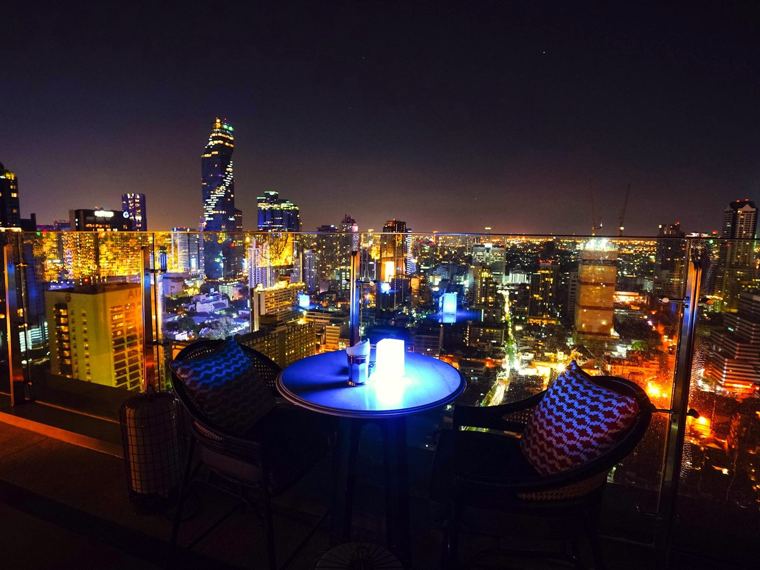
- A rooftop bar. For the skyline from above. See our guide to the best rooftop bars, and arrive around 5:30 pm.
For the widest view of all, the Mahanakhon SkyWalk looks over the whole city from the 78th floor.
After dark: Chinatown’s neon
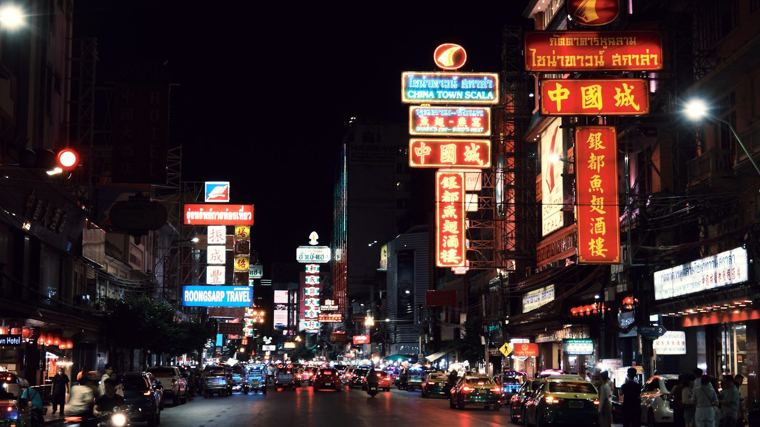
When the sun goes down, Yaowarat Road turns into the Bangkok of the postcards: huge neon signs in Chinese characters hanging over the traffic, steam from the food stalls, tuk-tuks streaking past. Stand on a corner, slow down your shutter or your phone’s night mode, and let the city move around you. The side lanes are as photogenic as the main road. Our Yaowarat street food guide tells you where to eat while you are there.
How to get better photos
- Go early or go late. Midday light is the enemy. The best Bangkok photos happen before 9 am and after 5 pm.
- Look for the details. Porcelain flowers at Wat Arun, temple guardians, shophouse doors, neon reflections in a puddle.
- Respect the place. Temples are active places of worship: do not pose with your back to a Buddha image, never point your feet at it, and follow the signs where photos are not allowed inside a hall.
- Ask before photographing people, especially monks and market vendors. A smile and a gesture at your camera are usually enough.
- Protect your gear. A small bag across your body, and a dry bag in the rainy season.
Want photos of yourself?
The problem with Bangkok’s photogenic spots: you come home with a thousand photos of temples and neon, and almost none of you. Or the ones you have are selfies and quick snaps by your partner, who never got a good one either.
A private photoshoot fixes that. A local photographer walks you through Chinatown and Talat Noi, knows where the light falls at what time, tells you how to stand without looking posed and sends you the edited photos the same day. For a honeymoon, an anniversary or a solo trip, they are the photos that survive the trip home.
Whichever way you go, set your alarm. Bangkok at 8 am, before the heat and the crowds, is a different city, and it is the one that looks best in photos.
Sources: Wat Arun, Wat Pho and Wat Saket visitor information, Tourism Authority of Thailand. Entry fees checked November 2026.