The Old Town and Chinatown sit right next to each other along the river, and together they hold most of what people picture when they think of Bangkok: golden temples, crowded markets, neon signs and street food. You can walk the whole route in one long day, in this order.
Getting there
The MRT Blue Line has stations in both areas: Sanam Chai for the Old Town and Wat Mangkon for Chinatown. The Chao Phraya Express Boat is the more scenic option. Get off at Tha Chang pier for the Grand Palace or Tha Tien for Wat Pho.
Wear light clothes that cover your shoulders and knees, comfortable shoes and a refillable water bottle. Bring cash too, because the Chinatown street stalls do not take cards.
Morning: the temples (8 am to noon)
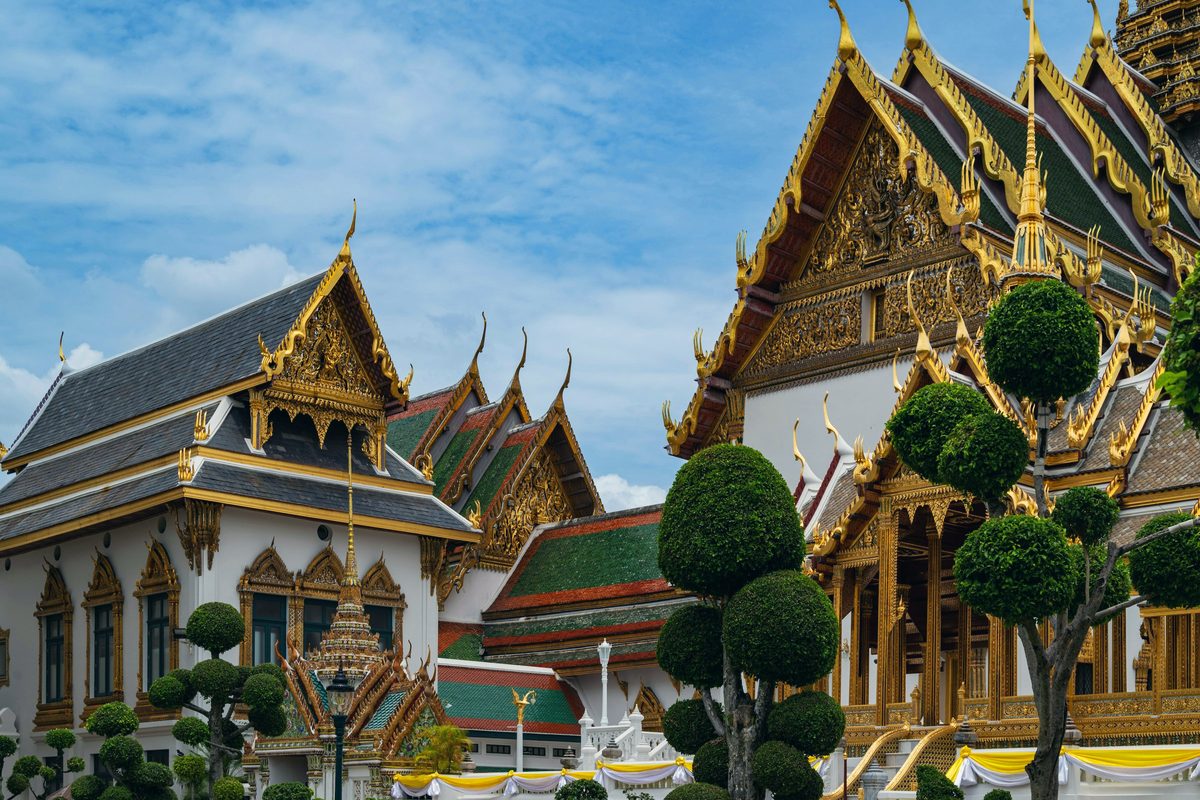
Be at the Grand Palace when it opens. The Temple of the Emerald Buddha inside the palace walls is the most sacred temple in Thailand, and it is far more pleasant before the tour buses arrive. It opens at 8:30 am, and tickets are sold until 3:30 pm.
Walk south to Wat Pho, home of the 46-metre reclining Buddha. Look at the feet: the soles are covered in mother-of-pearl inlay. Wat Pho is also known for its traditional massage school, if your legs already need a break.
From the pier behind Wat Pho, the cross-river ferry takes a few minutes to reach Wat Arun, the Temple of Dawn. Its spires are covered in fragments of porcelain. The steep steps give you a good view back across the river. Wat Arun is in Thonburi, and if you would like to stay on that side of the river, our Thonburi guide covers the canals and the Artist’s House.
Common mistake: listening to anyone who tells you the palace is “closed today”. It is an old trick to get you into a tuk-tuk headed for a gem shop.
If you would rather not work out three ticket queues and the river crossing yourself, this guided version does all three temples in one morning.
And for the eating half of the day, this is the tour we would book in Chinatown: eight people at most, fifteen tastings, drinks in the price.
Midday: the flower market
Walk or take a short ride to Pak Khlong Talat, Bangkok’s flower market, which runs around the clock. In the middle of the day it is quieter than at night, but you will still see piles of marigolds and orchids and people threading jasmine garlands by hand. Read more about the market.
This is a good moment for lunch and a cold drink. The afternoon is the hottest part of the day.
Afternoon: into Chinatown’s lanes
Head east into Chinatown. By day it is gold shops and wholesale trade, by night it is street food; our piece on Chinatown by day vs. by night explains the handover. Instead of the main road, walk through the narrow lanes:
- Sampeng Lane is a narrow, partly covered wholesale lane where you can buy almost anything in bulk, from hair clips to toys. Go in the morning, before the handcarts and the heat peak.
- Wat Mangkon Kamalawat is Chinatown’s busiest Chinese Buddhist temple, full of incense smoke and gold. The MRT station is named after it.
- Song Wat Road has old warehouses, cafés and some of the best light for photos late in the afternoon.
- Talat Noi, at the southern edge, is a maze of shophouses, machine workshops and street art right by the river. Our Talat Noi guide has more.
Photo spots worth the detour
- The red lanterns and incense inside Wat Mangkon.
- The painted shutters and old shophouses on Song Wat Road.
- The street art and riverside alleys of Talat Noi.
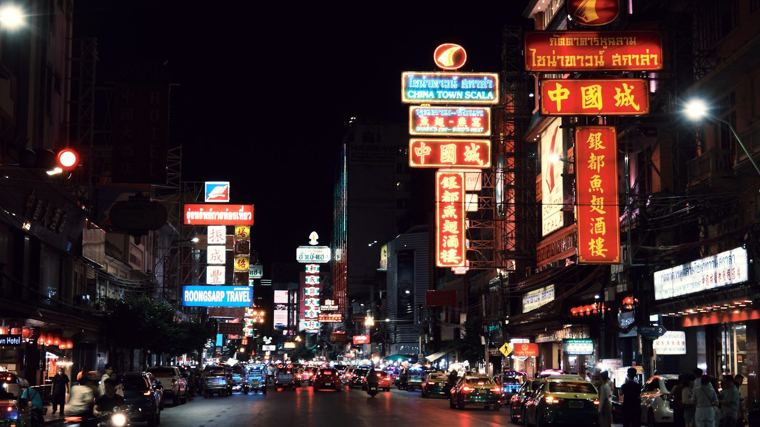
- Yaowarat Road at night, shot from a footbridge or street corner as the neon comes on.
For the rest of the city, from Wat Arun at sunrise to the Golden Mount at sunset, see our guide to Bangkok’s most photogenic places.
If you want photos of yourself in these places, consider booking a photographer. The shoot runs two and a half hours and covers exactly this part of Chinatown, with the edited pictures delivered the same day.
A second walk through the same lanes, for the history rather than the pictures: the Chinese brotherhoods that ran this part of the city until they were banned.
Evening: Yaowarat street food
Around sunset, Yaowarat Road changes. The gold shops close, the neon signs come on and food stalls fill the pavements. This is the best street food street in the city.
How to eat here well:
- Walk the whole road first, then decide.
- Join the queue with the most locals in it.
- Share. Order small plates from several stalls rather than one big meal at one.
- Bring small notes. Most stalls only take cash.
Our Yaowarat street food guide lists what to look out for.
If you would rather not plan the evening at all, a tuk-tuk tour picks you up at your hotel and covers Chinatown’s food, the flower market and Khao San Road in one go.
For more places to eat across the city, from Michelin-rated stalls to tasting menus, see where to eat in Bangkok.
Night owl? This food tour by tuk-tuk starts late and runs past midnight.
After dinner: a drink on Soi Nana
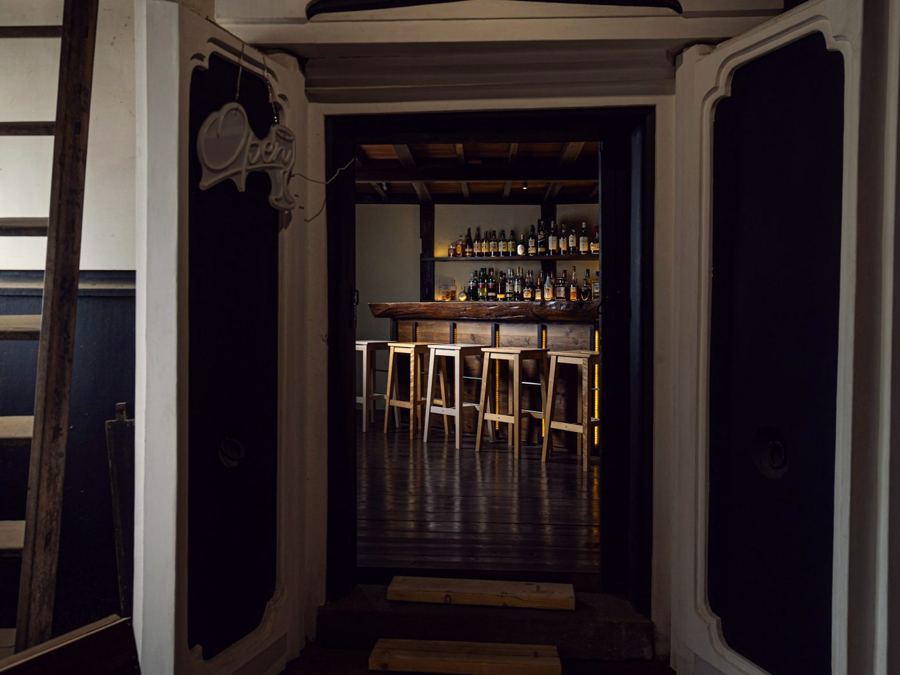
Walk ten minutes towards Hua Lamphong to Soi Nana, Chinatown’s bar street (not the one on Sukhumvit). Small cocktail bars fill old shophouses here. It is the perfect last stop. See our nightlife guide for details.
Is it worth booking a guide for this area?
For the temples, a guide adds a lot: the history and symbolism are easy to miss on your own. For Chinatown, you can do well alone with this route. For food, a guide helps you find the stalls you would never pick yourself.